
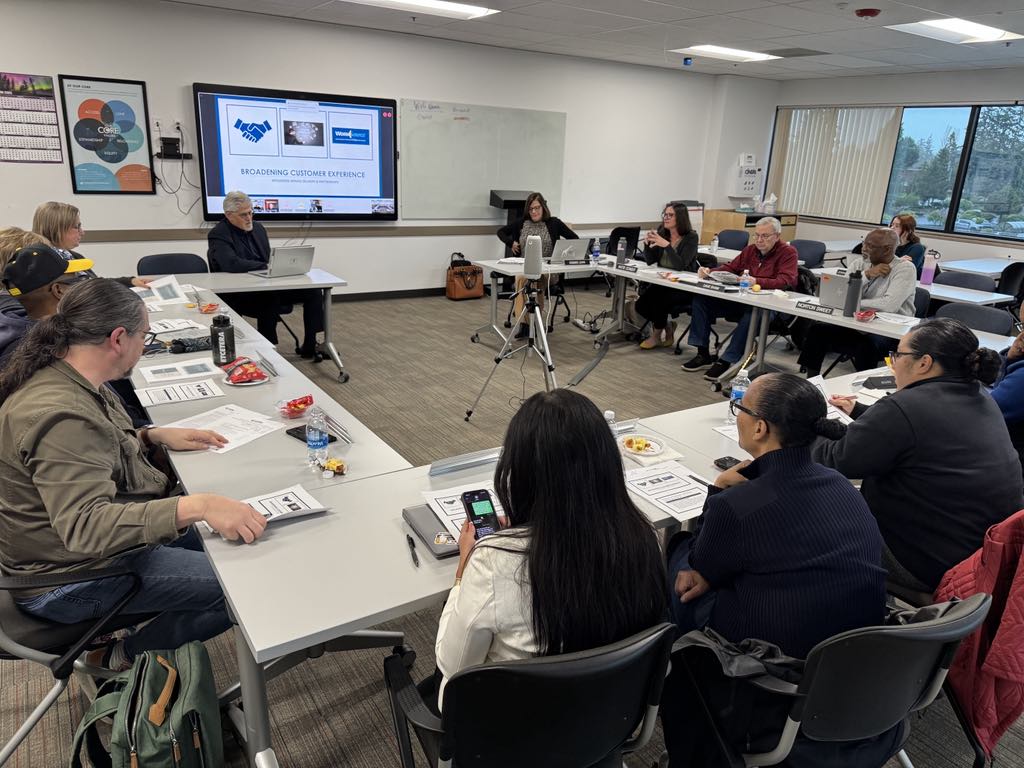
The Pierce County Workforce Development Board recently discussed the challenges women face in the workforce, particularly those who are experiencing domestic violence, and considered the role the board can and should play in shaping conversations with employers to support these employees.
Although women’s workforce participation is often linked to issues like childcare, domestic violence remains a critical and often overlooked barrier. Survivors of domestic violence face unique, compounding challenges that frequently go unaddressed in traditional workforce development strategies. Factors such as financial control exerted by abusers, legal entanglements, workplace harassment, and housing instability can severely hinder their ability to maintain steady employment.
In 2020, Pierce County reported 10.5 domestic violence crimes per 1,000 residents — the highest rate in the region. With 72% of victims being women and 76% of offenders being men, this is not a marginal issue — it’s a critical issue that directly affects women’s ability to thrive in the workforce.
Domestic violence is a leading contributor to job instability among women. Survivors are more likely to experience job loss, absenteeism, and long-term financial hardship. But instead of addressing the structural challenges they face, society often frames survivors as unreliable or high-risk employees—perpetuating stigma and economic dependence. This kind of workplace bias reinforces the very barriers that keep survivors in unsafe situations.
Many survivors don’t report these issues due to fear of stigma or losing their jobs. Data gaps obscure the full picture of how domestic violence impacts employment, and this silence limits informed action.
As leaders in our local workforce system, the board has committed to exploring ways we can help shape these discussions and educate and provide resources to employers for making changes.
Some ideas discussed include:
• Recognizing the signs of domestic violence through HR and leadership training
• Implementing flexible policies, including paid leave, remote work, and adaptable scheduling
• Improving workplace safety through confidentiality measures and security protocols
• Providing supportive resources, such as employee assistance programs and partnerships with local domestic violence organizations
We also need to reframe workplace narratives — seeing survivors not as fragile or disruptive but as resilient individuals overcoming profound challenges. The way we talk about survivors matters. Are we supporting their success or reinforcing their barriers?